BuyWise checklist blog
Before Building a Remote Team: Complete Buying Checklist
A focused checklist to evaluate critical aspects of assembling and managing a remote team, ensuring operational efficiency and alignment.
Introduction
This building a remote team checklist helps you make a clearer decision before money leaves your account. Instead of juggling scattered advice, you work through a practical sequence designed for real-world buying.
A focused checklist to evaluate critical aspects of assembling and managing a remote team, ensuring operational efficiency and alignment.
Use the sections below as a working framework. Tick what you can verify now, flag what is still unclear, and only proceed when the important unknowns are resolved.
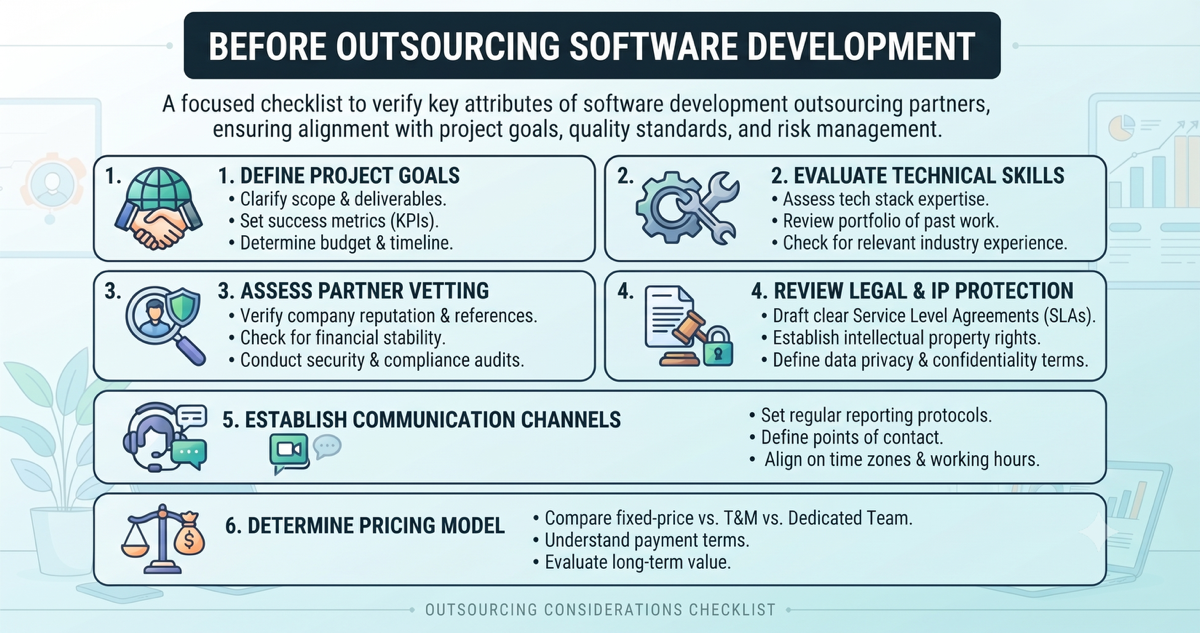
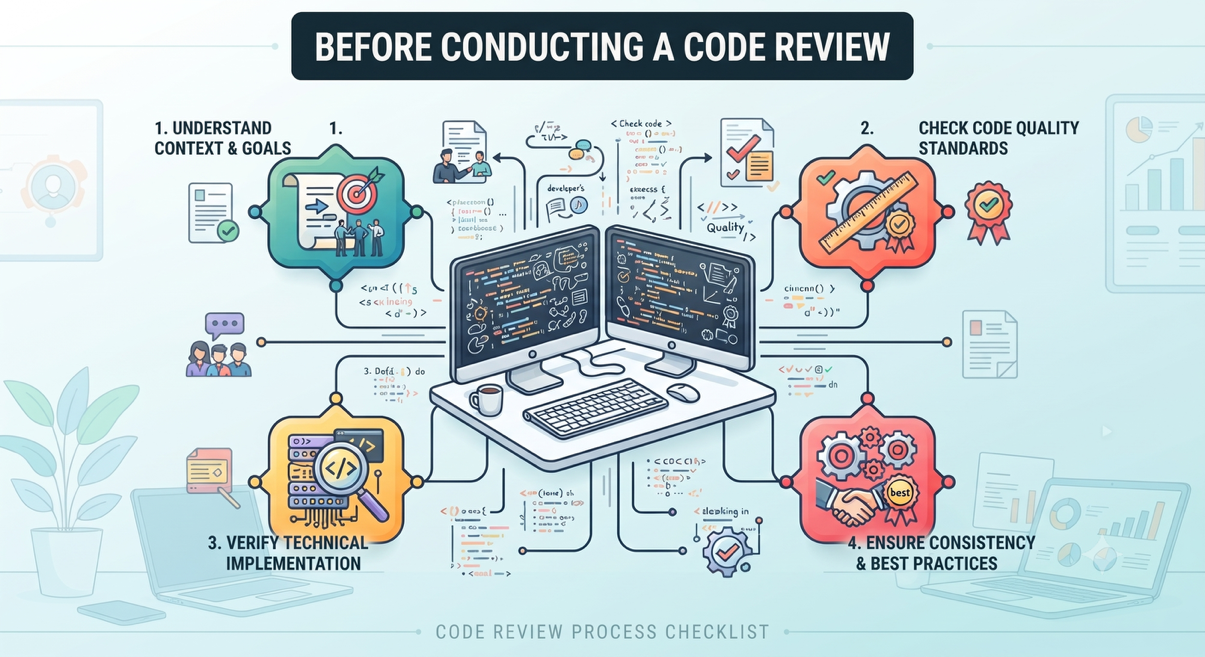
Related BuyWise guides: One Overlooked Aspect When Building a Startup · How to Optimize Console Storage Management · Before Outsourcing Software Development · Before Hiring Software Engineers · Before Conducting a Code Review.
Why this checklist matters
Buying Building a Remote Team is rarely about one feature. Total cost, reliability, paperwork, and post-purchase support all affect whether the decision still feels smart weeks later.
A structured checklist creates accountability: every important concern becomes an explicit step. That is especially useful when sales pressure or information overload kicks in.
In Business, small missed details often become expensive corrections. Completing this guide before commitment is usually cheaper than fixing a rushed purchase.
Complete checklist
Work through each section in order. Every item below includes practical guidance so you know what “done” looks like before you buy.
Communication Tools
5 items1.Verify that the chosen platform supports end-to-end encryption for all messages, files, and video calls, and confirm encryption is active by checking account settings or security logs.
Inspect carefully in person or via a trusted checklist walkthrough. Look for defects, missing parts, and mismatches with the listing before you commit to Building a Remote Team.
2.Test real-time chat latency by sending messages between two remote locations and measure response times; acceptable latency must be under 200 milliseconds to avoid workflow delays.
Inspect carefully in person or via a trusted checklist walkthrough. Look for defects, missing parts, and mismatches with the listing before you commit to Building a Remote Team.
3.Confirm that the platform integrates with at least two existing team tools (e.g., project management software, calendar apps) via API or native integrations, and validate data sync accuracy.
Treat “Confirm that the platform integrates with at least two existing team tools (e.g., project management software, calendar apps) via API or native integrations, and validate data sync accuracy.” as a decision gate, not a formality. Confirm the facts, note any uncertainty, and only proceed with Building a Remote Team when this point is clearly resolved.
4.Check storage capacity and usage policies to ensure the platform provides at least 50 GB per user with clear retention rules, avoiding unexpected data loss or overage fees.
Inspect carefully in person or via a trusted checklist walkthrough. Look for defects, missing parts, and mismatches with the listing before you commit to Building a Remote Team.
5.Validate compliance with relevant data protection regulations (e.g., GDPR, CCPA) by reviewing the provider’s privacy policy and confirming they do not sell user data or store it in unauthorized regions.
Inspect carefully in person or via a trusted checklist walkthrough. Look for defects, missing parts, and mismatches with the listing before you commit to Building a Remote Team.
Time Zone Coverage
5 items1.Confirm at least 4 overlapping work hours between your location and each team member's local time for core business hours (e.g., 10 AM–2 PM EST)
Treat “Confirm at least 4 overlapping work hours between your location and each team member's local time for core business hours (e.g., 10 AM–2 PM EST)” as a decision gate, not a formality. Confirm the facts, note any uncertainty, and only proceed with Building a Remote Team when this point is clearly resolved.
2.Identify and document any critical hours (e.g., client meeting windows, product launches) requiring extended overlap beyond the standard 4 hours
Collect and store every document: invoice, serial numbers, contracts, and warranties. Clear paperwork protects you if something goes wrong after buying Building a Remote Team.
3.Establish a contingency plan for emergencies or urgent decisions when core overlap hours are not active (e.g., on-call rotation, backup team members)
Treat “Establish a contingency plan for emergencies or urgent decisions when core overlap hours are not active (e.g., on-call rotation, backup team members)” as a decision gate, not a formality. Confirm the facts, note any uncertainty, and only proceed with Building a Remote Team when this point is clearly resolved.
4.Verify that all team members have access to and can use a world-time zone converter tool during scheduling conflicts
Inspect carefully in person or via a trusted checklist walkthrough. Look for defects, missing parts, and mismatches with the listing before you commit to Building a Remote Team.
5.Flag any team member whose local time falls outside the required overlap window more than twice in a quarter for review
Inspect carefully in person or via a trusted checklist walkthrough. Look for defects, missing parts, and mismatches with the listing before you commit to Building a Remote Team.
Contract Compliance
5 items1.Verify all employment contracts are signed and dated by both parties, with clear start dates and termination clauses.
Inspect carefully in person or via a trusted checklist walkthrough. Look for defects, missing parts, and mismatches with the listing before you commit to Building a Remote Team.
2.Confirm contracts reference the appropriate country-specific labor law (e.g., EU Working Time Directive, US FLSA) and include mandatory benefits.
Measure twice and match specifications to your real constraints. Compatibility mistakes are one of the most expensive errors with Building a Remote Team.
3.Check for explicit intellectual property (IP) assignment clauses stating that all work product belongs to the hiring entity.
Inspect carefully in person or via a trusted checklist walkthrough. Look for defects, missing parts, and mismatches with the listing before you commit to Building a Remote Team.
4.Ensure contracts specify confidentiality periods (e.g., 2–3 years post-employment) and include non-compete geographic scope limitations.
Collect and store every document: invoice, serial numbers, contracts, and warranties. Clear paperwork protects you if something goes wrong after buying Building a Remote Team.
5.Validate that contracts include a dispute resolution mechanism (e.g., arbitration in a defined jurisdiction) with a neutral third-party arbitrator.
Collect and store every document: invoice, serial numbers, contracts, and warranties. Clear paperwork protects you if something goes wrong after buying Building a Remote Team.
Productivity Metrics
5 items1.Define at least three role-specific KPIs (e.g., weekly tickets closed for developers, client outreach hours for sales, content pieces published for marketers)
Match the exact model and specs to your needs. Marketing language can hide important differences that affect long-term satisfaction with Building a Remote Team.
2.Set reporting frequency (daily standups, weekly dashboards, monthly reviews) and assign a designated owner for each report
Inspect carefully in person or via a trusted checklist walkthrough. Look for defects, missing parts, and mismatches with the listing before you commit to Building a Remote Team.
3.Configure time-tracking and project management tools (e.g., Toggl, Asana, Jira) to auto-generate productivity reports aligned with defined KPIs
Treat “Configure time-tracking and project management tools (e.g., Toggl, Asana, Jira) to auto-generate productivity reports aligned with defined KPIs” as a decision gate, not a formality. Confirm the facts, note any uncertainty, and only proceed with Building a Remote Team when this point is clearly resolved.
4.Establish baseline productivity thresholds (e.g., 2 tickets/day, 20 client calls/week) and document consequences for consistent underperformance
Collect and store every document: invoice, serial numbers, contracts, and warranties. Clear paperwork protects you if something goes wrong after buying Building a Remote Team.
5.Implement a quarterly audit to verify that all KPIs remain relevant and adjust thresholds based on team growth or changing business goals
Inspect carefully in person or via a trusted checklist walkthrough. Look for defects, missing parts, and mismatches with the listing before you commit to Building a Remote Team.
Tech Infrastructure
5 items1.Verify each team member's computer meets minimum specs: CPU >= Intel i5 or AMD Ryzen 5, RAM >= 16GB, SSD >= 512GB.
Inspect carefully in person or via a trusted checklist walkthrough. Look for defects, missing parts, and mismatches with the listing before you commit to Building a Remote Team.
2.Test VPN connection speed and stability: consistent latency under 50ms and download speeds above 10Mbps during peak usage hours.
Inspect carefully in person or via a trusted checklist walkthrough. Look for defects, missing parts, and mismatches with the listing before you commit to Building a Remote Team.
3.Ensure endpoint security policy includes mandatory encryption of all devices and automatic updates enabled on OS and critical software.
Treat “Ensure endpoint security policy includes mandatory encryption of all devices and automatic updates enabled on OS and critical software.” as a decision gate, not a formality. Confirm the facts, note any uncertainty, and only proceed with Building a Remote Team when this point is clearly resolved.
4.Confirm two-factor authentication (2FA) is enabled on all accounts, with backup codes stored securely offline.
Treat safety and fraud checks as non-negotiable. If anything feels rushed, opaque, or pressured, pause and verify before continuing with Building a Remote Team.
5.Check backup strategy: automated daily backups of critical data to encrypted cloud storage with a 3-month retention policy.
Inspect carefully in person or via a trusted checklist walkthrough. Look for defects, missing parts, and mismatches with the listing before you commit to Building a Remote Team.
Common mistakes
- Leaving paperwork to the end, then discovering missing warranties or unclear terms.
- Letting urgency or scarcity pressure override unfinished checklist items.
- Skipping a second quote or comparison and accepting the first “good enough” option for Building a Remote Team.
- Focusing only on upfront price while ignoring fees, maintenance, or replacement risk.
Expert buying tips
- Write your must-haves before browsing so shiny extras do not redefine the purchase.
- Capture evidence as you go—photos, screenshots, model numbers, and written quotes.
- Decide your walk-away conditions in advance (budget ceiling, deal-breakers, timing).
- Revisit the checklist after sleep or a short break; fresh eyes catch expensive misses.
Frequently asked questions
What is a Building a Remote Team checklist?
A Building a Remote Team checklist is a structured set of checks to complete before you buy. BuyWise organizes the process into sections such as Communication Tools, Time Zone Coverage, Contract Compliance so you do not miss costly details.
Why should I use a checklist before buying Building a Remote Team?
Most buying regrets come from skipped details—compatibility, total cost, warranty, or seller risk. A checklist forces those checks into a clear order so your business decision is calmer and more complete.
How long does the building a remote team checklist take?
Most people can work through the core checks in one focused session, then revisit anything unresolved. Complex purchases may need a second pass after quotes, inspections, or comparisons.
What are common mistakes when buying Building a Remote Team?
Rushing the decision, comparing only sticker price, skipping paperwork, and ignoring return or warranty terms. The sections in this guide are designed to catch those failure points early.
Is this building a remote team checklist free?
Yes. This guide is free to read on the web, and you can also open it in the BuyWise app to tick items and save progress offline.
Can I customize this checklist?
In the BuyWise app you can track progress, keep notes, and build personal checklists for decisions that need extra steps beyond this published framework.
Who is this checklist for?
Anyone preparing to buy Building a Remote Team—first-time buyers, careful researchers, and people who want a repeatable framework instead of scattered notes across tabs and chats.
How is BuyWise different from a random blog list?
BuyWise checklists are structured for action: ordered sections, tickable items, offline progress, and related guides for the next decision in the same buying journey.
Conclusion
If you complete the checks in this building a remote team checklist, you will know what is verified, what is still open, and whether the purchase deserves a yes.
Open the same checklist in the BuyWise app to track progress offline, revisit unfinished items, and continue into related buying guides when the next decision appears.